 02. Who are we?
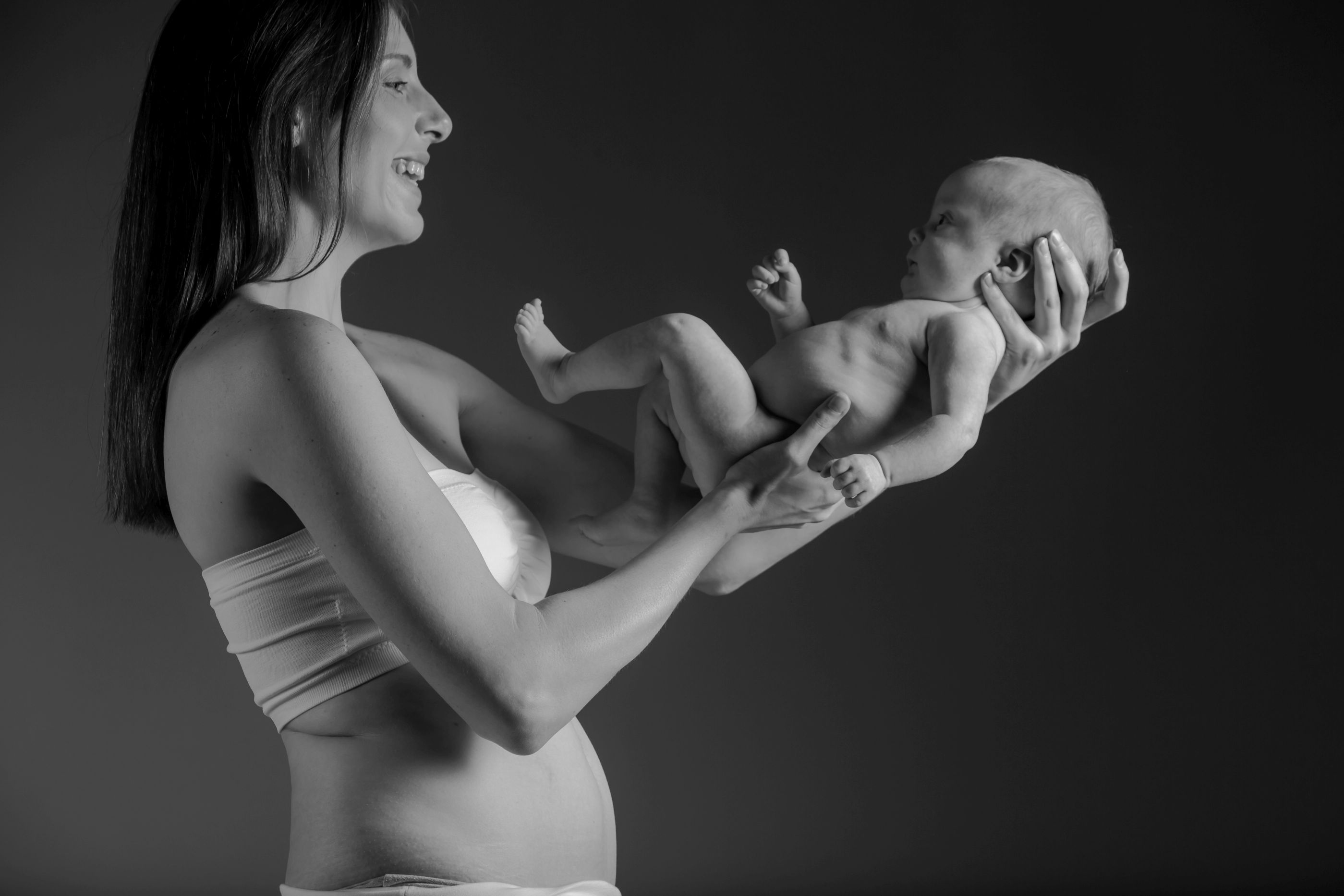 Bio-Oil’s Marks of Change initiative explores the changes that occur in the body during two hugely transitional periods in a woman’s life – adolescence and pregnancy. In addition to focusing on stretch marks as a result of these transformations, Bio-Oil explored the emotional effects of these changes and the adjustments women have to make as they transition from teenager to woman, and from woman to mother.
Stretch marks commonly occur during pregnancy, affecting up to 88% of pregnant women. Research indicates that adolescents are also affected, with up to 70% of girls and 40% of boys developing stretch marks during puberty, some from as young as 10 years old. Bio-Oil commissioned husband and wife team, Rob and Karin Schermbrucker, to capture the Marks of Change as experienced by 14 ‘real’ teenage girls and women, none of whom are professional models, but who were willing to share their experiences.
“Understanding the body’s journey allows one to embrace the changes and celebrate the process. As a wife and mother of two, I was able to identify with the journey from teenager to woman and from woman to mother,” said photographer Karin Schermbrucker. “I was challenged as to how I would translate the ‘marks of change’ visually, and emotively capture the essence of these two pivotal times in a woman’s life. Our ‘models’ arrived, awkward, closed and somewhat self-conscious but left feeling free and beautiful!”
Through a series of emotive photographs and video, Bio-Oil presented the Marks of Change exhibition at a special briefing session for the media. In addition to this, Bio-Oil invited medical professionals to explore the topic in an expert panel discussion. Dermatologist Dr Ayesha Moolla, gynaecologist Dr Jana Rossouw, life coach and psychologist Megan de Beyer and clinical psychologist Maropeng Ralenala answered questions around these transitional phases from an expert skin, body and mind perspective.
Stretch marks, or striae, occur when the body expands faster than the skin covering it, resulting in internal tears in the deep dermis. When these tears heal, they form scars known as stretch marks. Although stretch marks do not represent a significant medical problem, they can cause emotional distress to those who develop them. The likelihood of developing them varies according to skin type, age, genetic disposition, diet and the hydration of the skin. Dr Moolla highlights that, “recognising striae early is crucial. The condition may respond to products and prescription treatment if commenced on newly developed striae. Once the striae are older, they are more refractory to treatment”.
Adolescent Marks of Change
Growth spurts and the development of breasts and hips often result in stretch marks, an added unwelcome complication at a time when girls are already feeling self-conscious and sensitive. “Adolescents are the highest risk group for eating disorders and body image disorders, often because a preoccupation with body shape and size develops from the rapid body changes,” warns clinical psychologist Maropeng Ralenala. “Stretch marks are an example of physical changes during puberty that are much misunderstood and thus can cause great distress, self-blame and lead to a dysfunctional pre-occupation with weight and physical appearance.”
Aimee, who is 15 years old and a Marks of Change participant, expressed some of the body confidence issues typical of a teenager; “You look at yourself in the mirror and you look at all your imperfections and it really degrades your self-confidence…We tend to focus on the negatives, rather than the positives.”
Consumer research conducted by Ipsos and Seventeen Magazine for Bio-Oil, found that 97% of the respondents had stretch marks. In the 10 to 12 years old category, 42% already had stretch marks on their thighs and 21% on their hips. Three-quarters of respondents were concerned enough that they were trying various methods to improve the appearance of their stretch marks. Respondents associated their stretch marks with feelings of insecurity and embarrassment, and referred to them as “ugly”.
Sam, who is 17 years old, shared how she had to overcome her negative associations with her stretch marks. “My first reaction to my stretch marks was, ‘oh my gosh, what are these? How am I meant to walk out confidently in a bikini with these defects!’ I had to accept that the stretch marks on my thighs aren’t a defect, they represent me growing and maturing. They are my little steps into womanhood.”
Mothers’ Marks of Change
During pregnancy the body expands so rapidly that the skin isn’t always able to adjust sufficiently, resulting in stretch marks, which affect up to 88% of pregnant women. Research shows that one in three women feel self-conscious, embarrassed, worried or even ashamed about their stretch marks. “It’s difficult to say what position a woman’s body will be in until she has had her kids, but it’s a sacrifice you need to make to have your children,” says Tracey, mother to Rain, 2 months old.
Lisa, mother to 11 month old Erin, shares this sentiment; “The changes in my body are because of my children and I wouldn’t have them if it weren’t for them. I’d be happier if they weren’t there, but not if it meant my children weren’t there.”
Whilst many women experience negative emotional responses to their body post-pregnancy, these marks are also seen as a treasured reminder of their child’s birth. “Your body never goes back to how it was before, but I don’t think you expect it to because as a person you have also changed. It would feel very incongruent to have such a huge change happen internally and that not be reflected in some way,” says Kirsten, who is featured in Marks of Change with her second daughter, two-week-old Amelia Jane.
As a mother to two young children, Karin Schermbrucker reflects on the Marks of Change initiative with affection; “It was without a doubt, one of my most favourite shoots. My time with the women and the final images reminded me how much I love being a woman and just how magnificent and perfectly created the female form is.”
To see the Marks of Change video visit www.youtube.com/BioOilSouthAfrica
#BioOilSA #marksofchange
For further information on Bio-Oil visit www.bio-oil.com